Elate
Care management SaaS, offline carer app and Innovate UK–funded service design
A care platform co-designed with older people and carers, then rebuilt as a modern SaaS and an offline-first carer app.
- Year
- 2020 – present
- Client
- Own product, funded by Innovate UK's Healthy Ageing Challenge
- Live
- elateuk.com
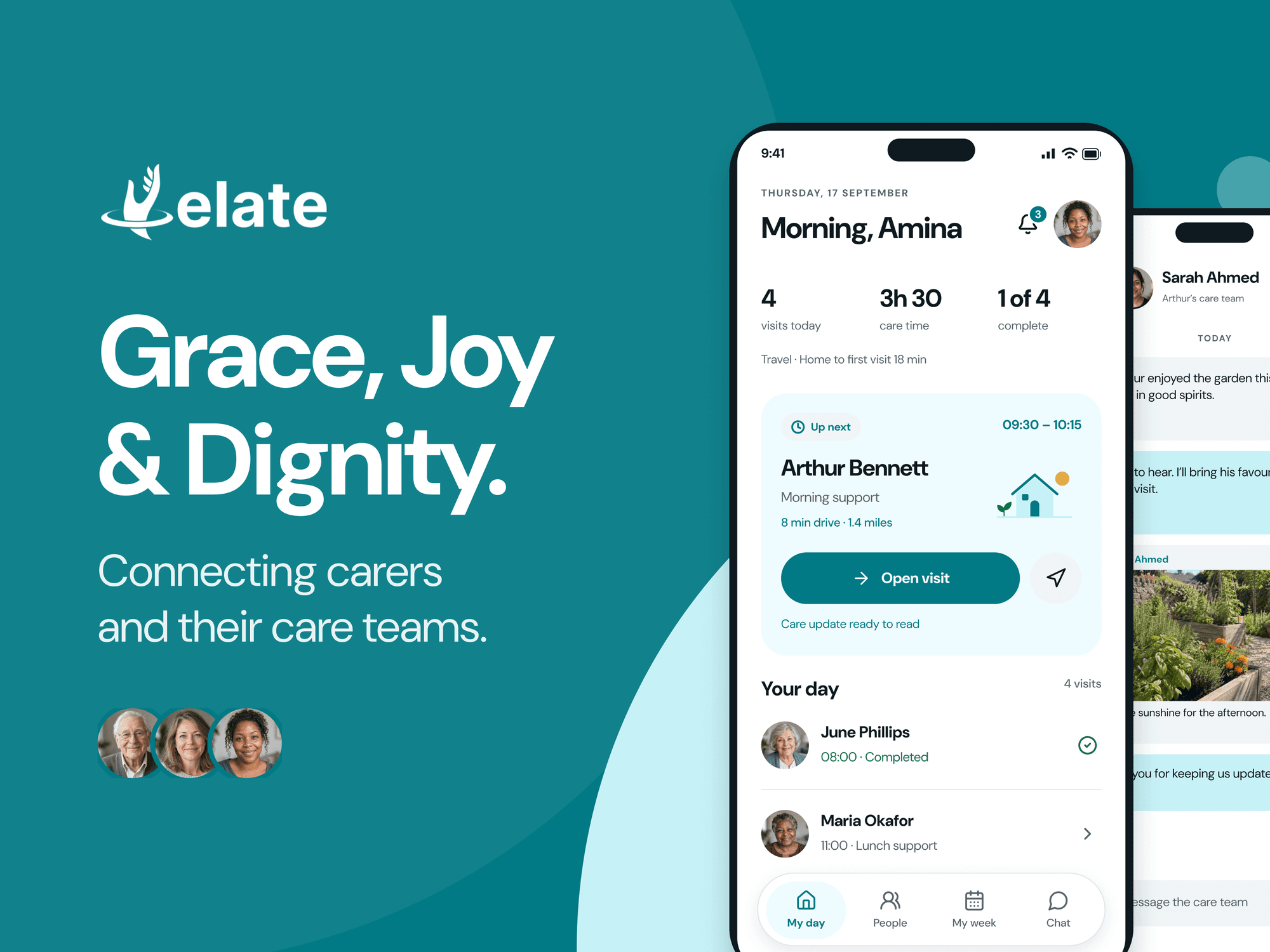
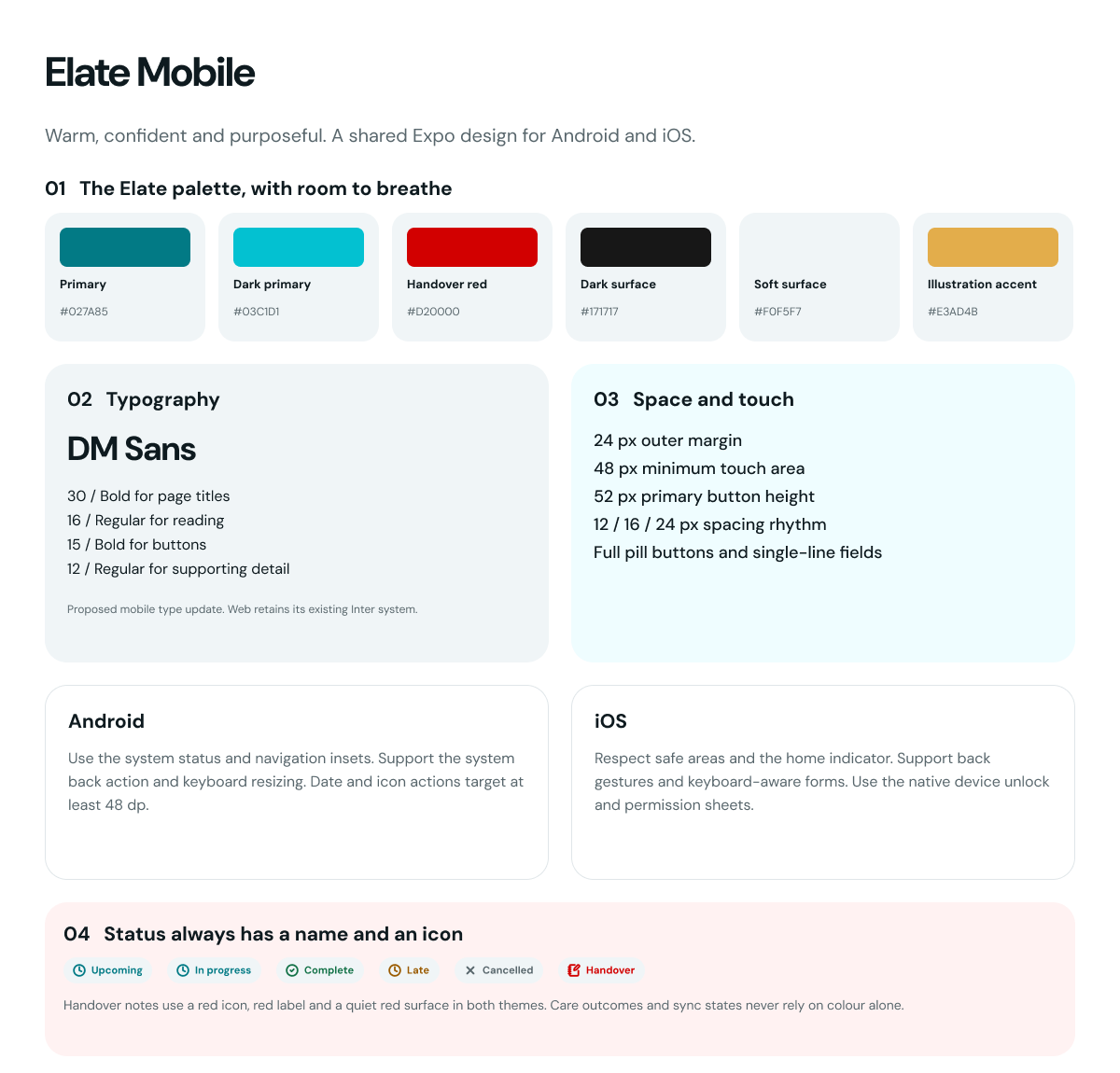
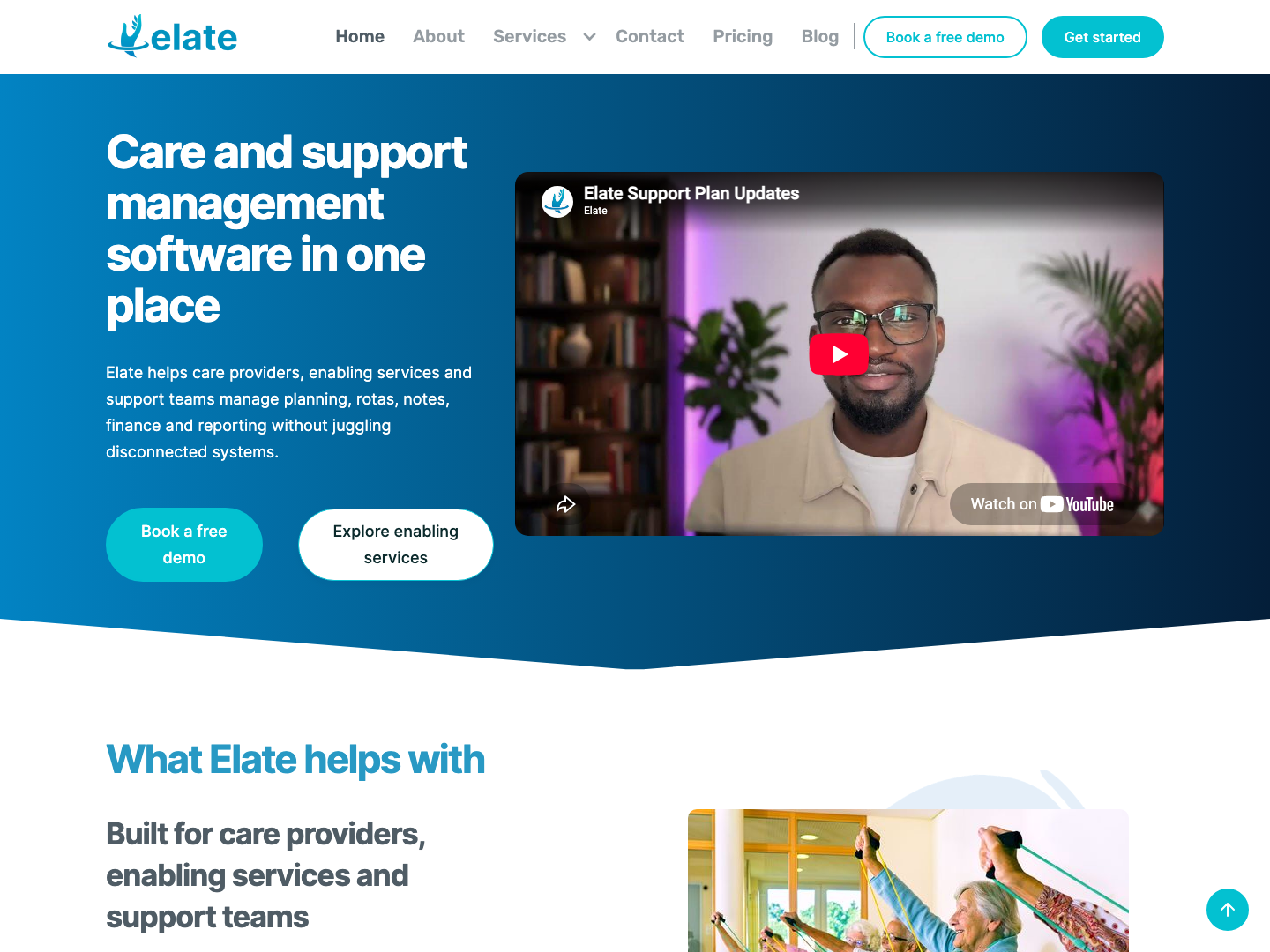
Elate Care, the carer app (Expo / React Native). It works offline: visits, notes and medication records are saved in an encrypted on-device database and sync when the carer is back online.
- Innovate UK funding secured
- £650k+
- of trial participants said sharing their support with family helps them stay independent
- 80%
- commits in four months on the 2.0 rebuild
- ~1,200
- automated tests
- 500+
Overview
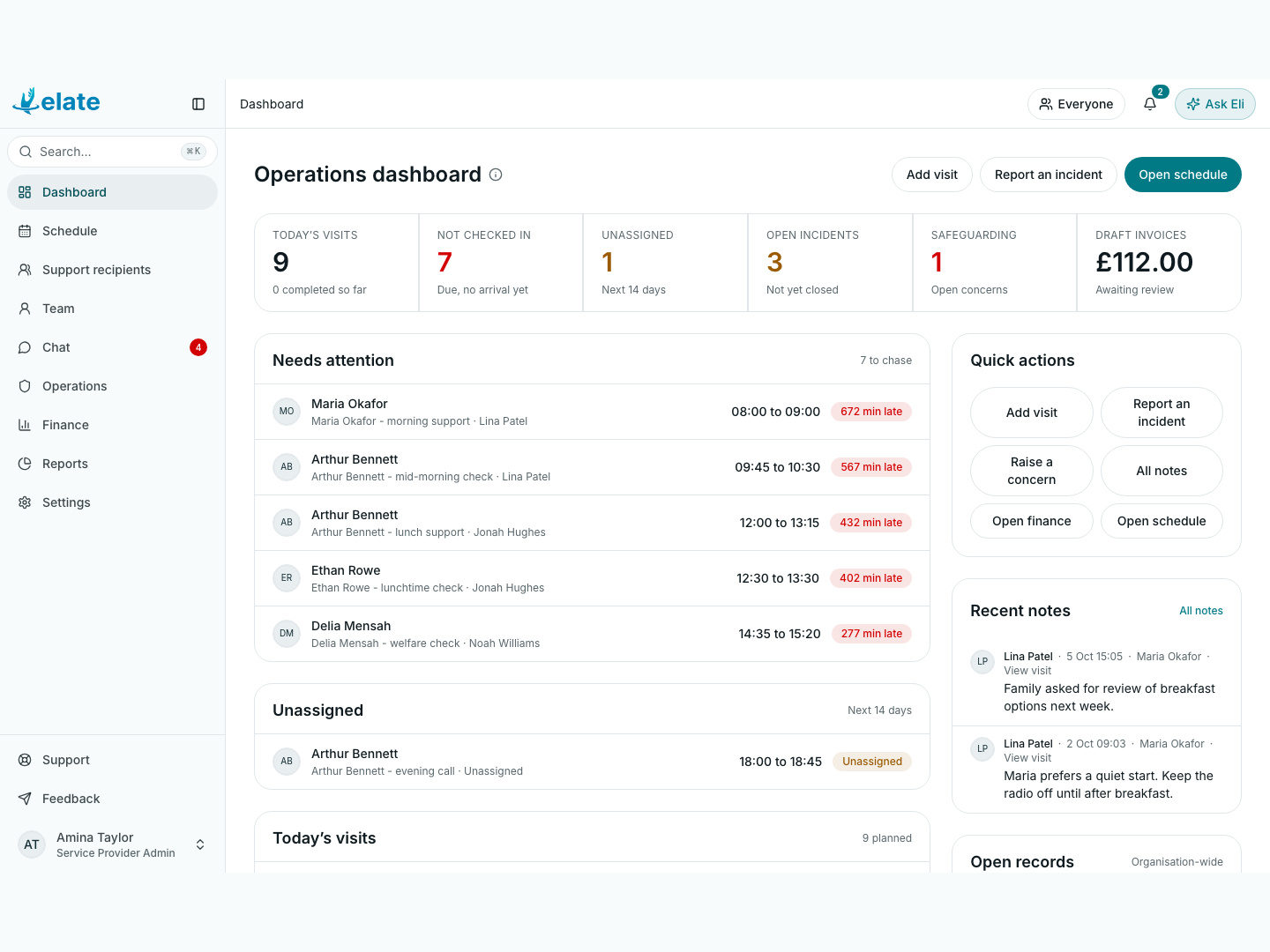
Elate (formerly Care Access) helps UK home-care providers run their services and keeps families involved in the support their loved ones receive. I have led it from the first research sessions in 2020 to today's Elate 2.0: an office web app for managers and an offline-first mobile app for carers, rebuilt from a legacy Java, GraphQL and AWS system.
Research & service design
Designed and led the research programme across four user groups: people receiving support, unpaid family carers, paid carers and home-care providers. Methods included in-home focus groups, interviews, online surveys, prototype testing and supervised trials.
Synthesised findings into personas and empathy maps, then prioritised themes by frequency and severity so the team could see which problems mattered most and why.
One finding changed the product: older people and family carers felt a stigma around the word “care”. We rewrote the language of the whole service around support and independence.
Turned research into service changes: escalation for missed support tasks, an offline fallback for rural connectivity, user-controlled audit trails and a simpler view of care arrangements.
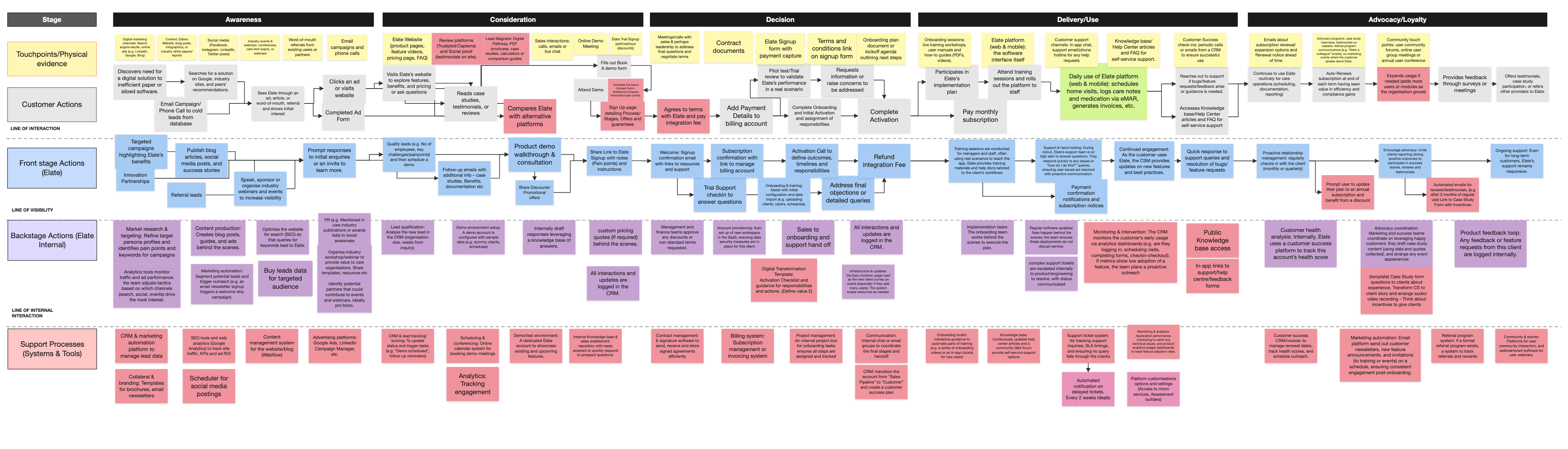
Built an end-to-end service blueprint in Miro, from awareness to advocacy. It exposed broken handoffs between sales, onboarding, support and engineering, and became the team's reference for the rebuild.
Designed for older and less confident users from the start: WCAG 2.2 AA, assisted-digital routes such as in-person onboarding and printed records, and several channels (app, PDF, SMS and email).
What I built
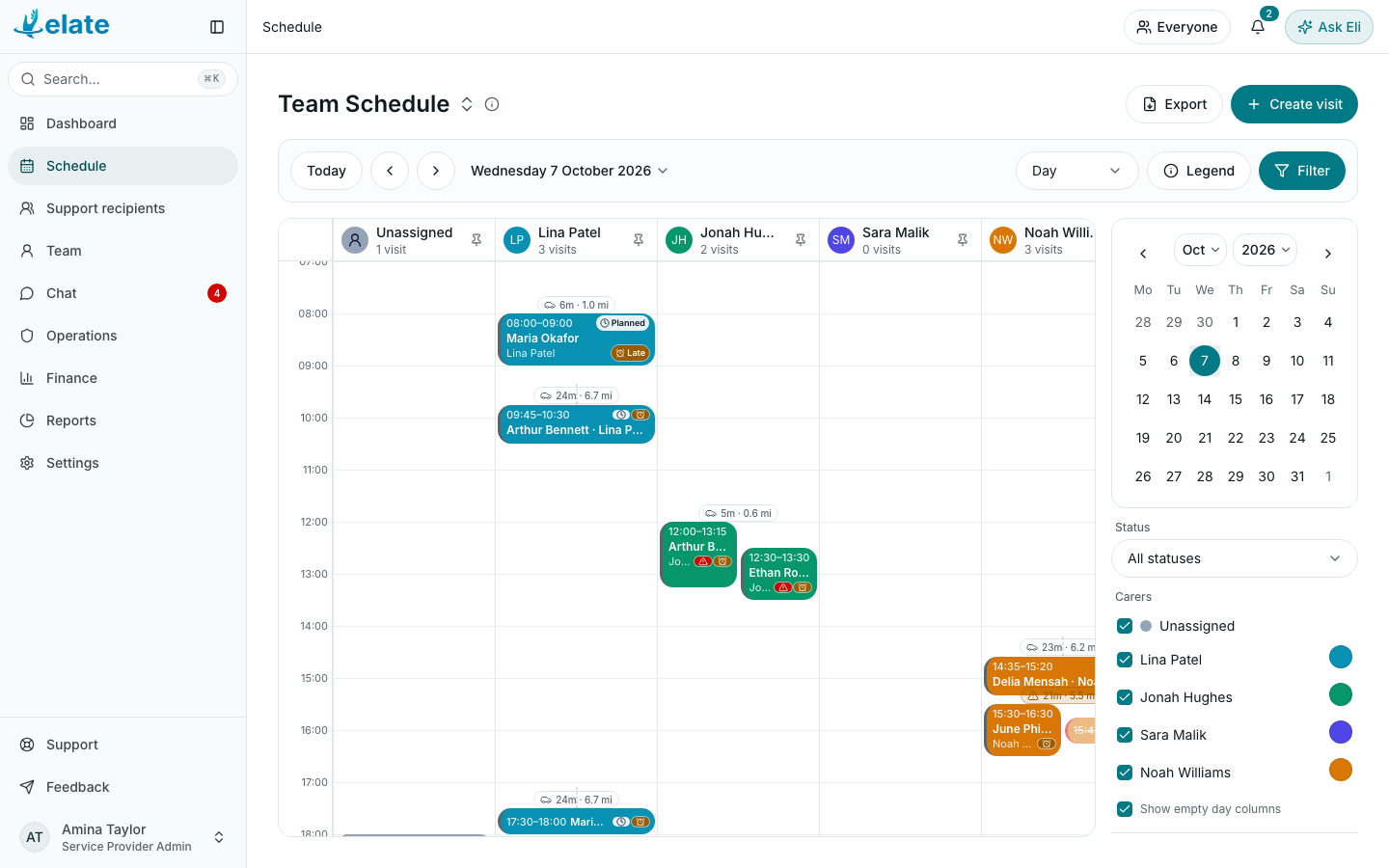
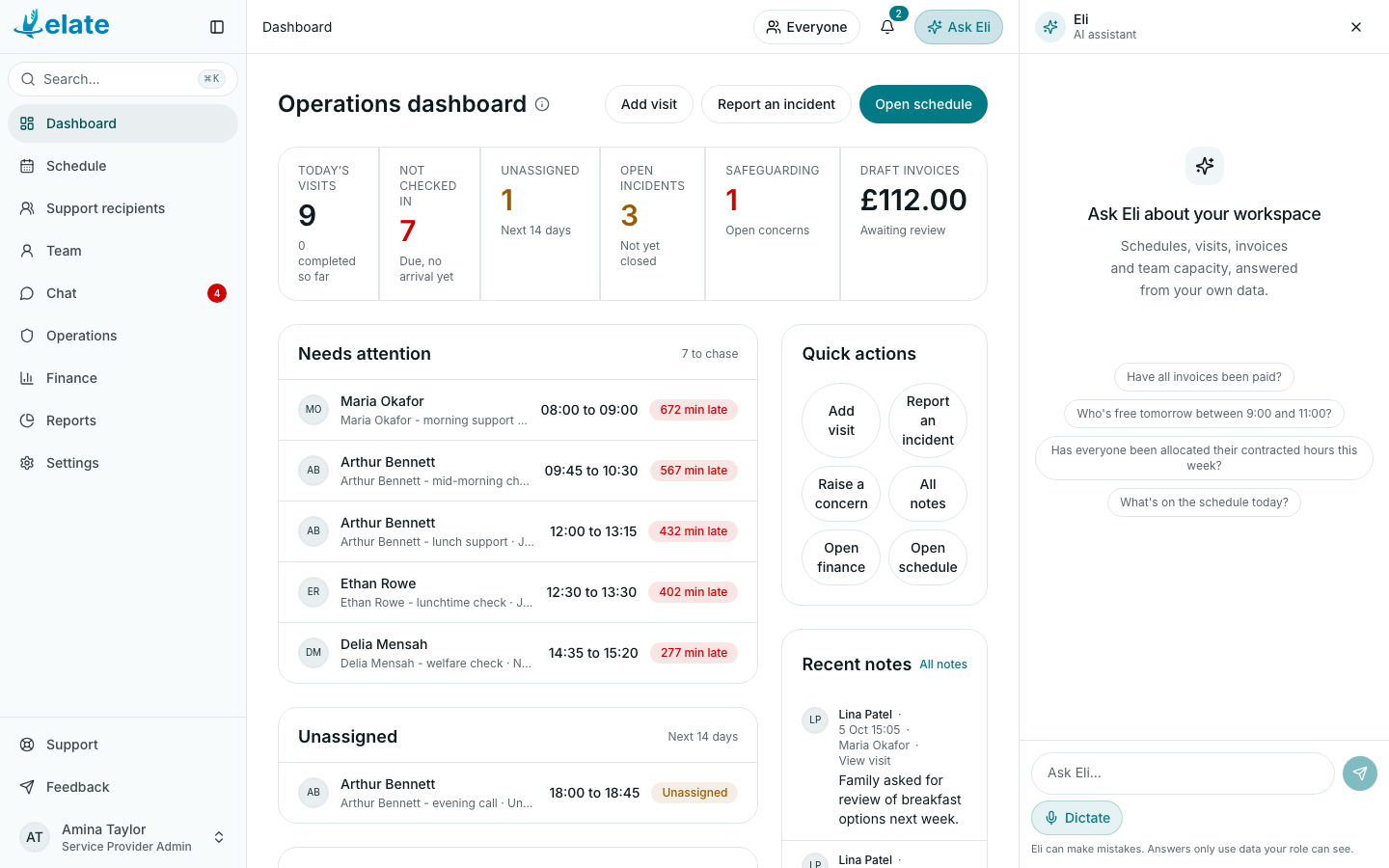
Rebuilt the platform from a legacy Java, GraphQL and AWS system into a Turborepo: a React 19, Vite and TanStack web app with shadcn components, deployed on Vercel in the London region.
Bridged Clerk sign-in to Supabase Postgres with row-level security, so every query is scoped to the right provider, role and person. The schema has grown through 173 migrations.
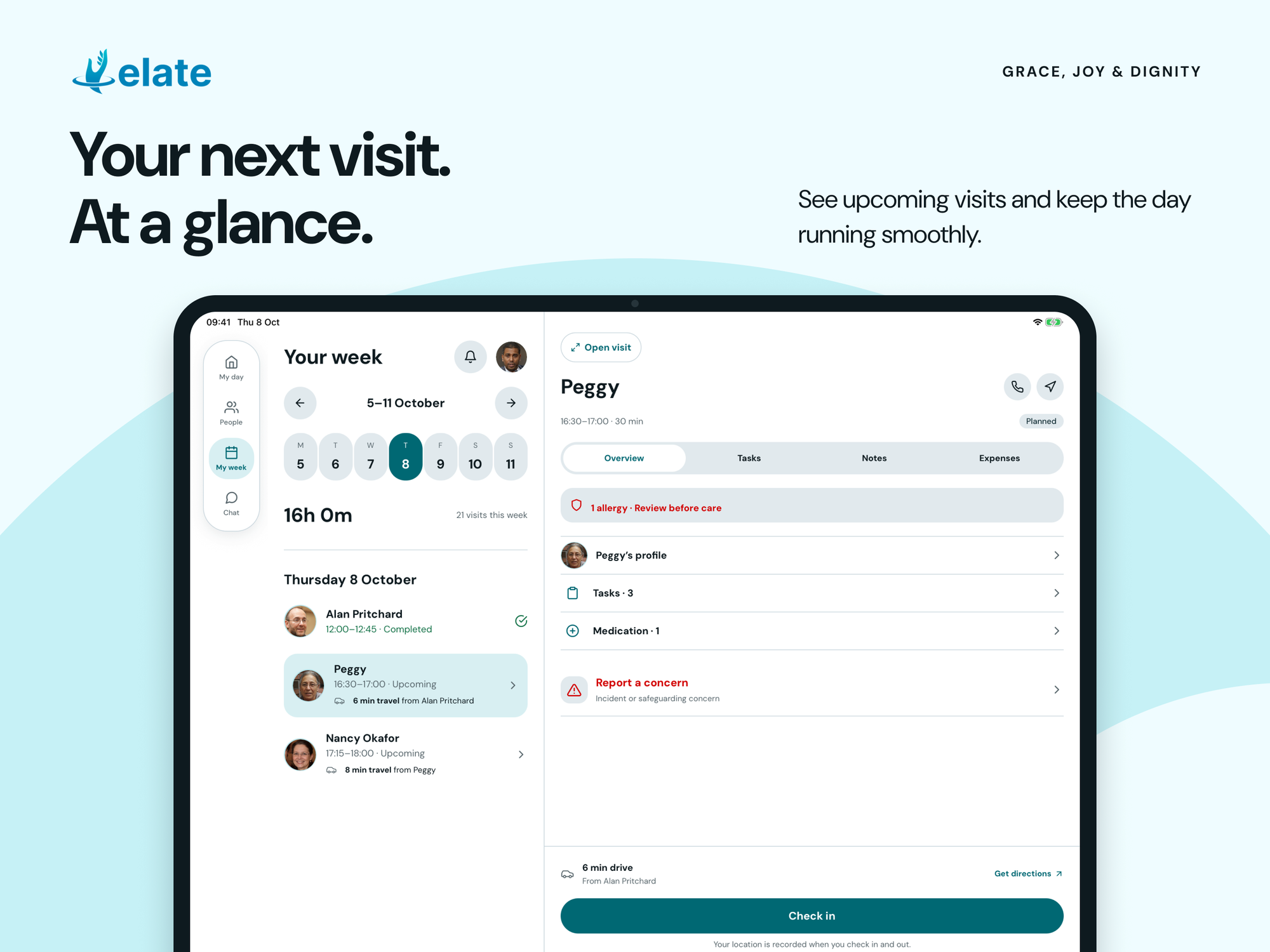
Built an offline-first carer app in Expo / React Native. Visits, notes and medication records are saved to an encrypted on-device database and sync when the carer is back online.
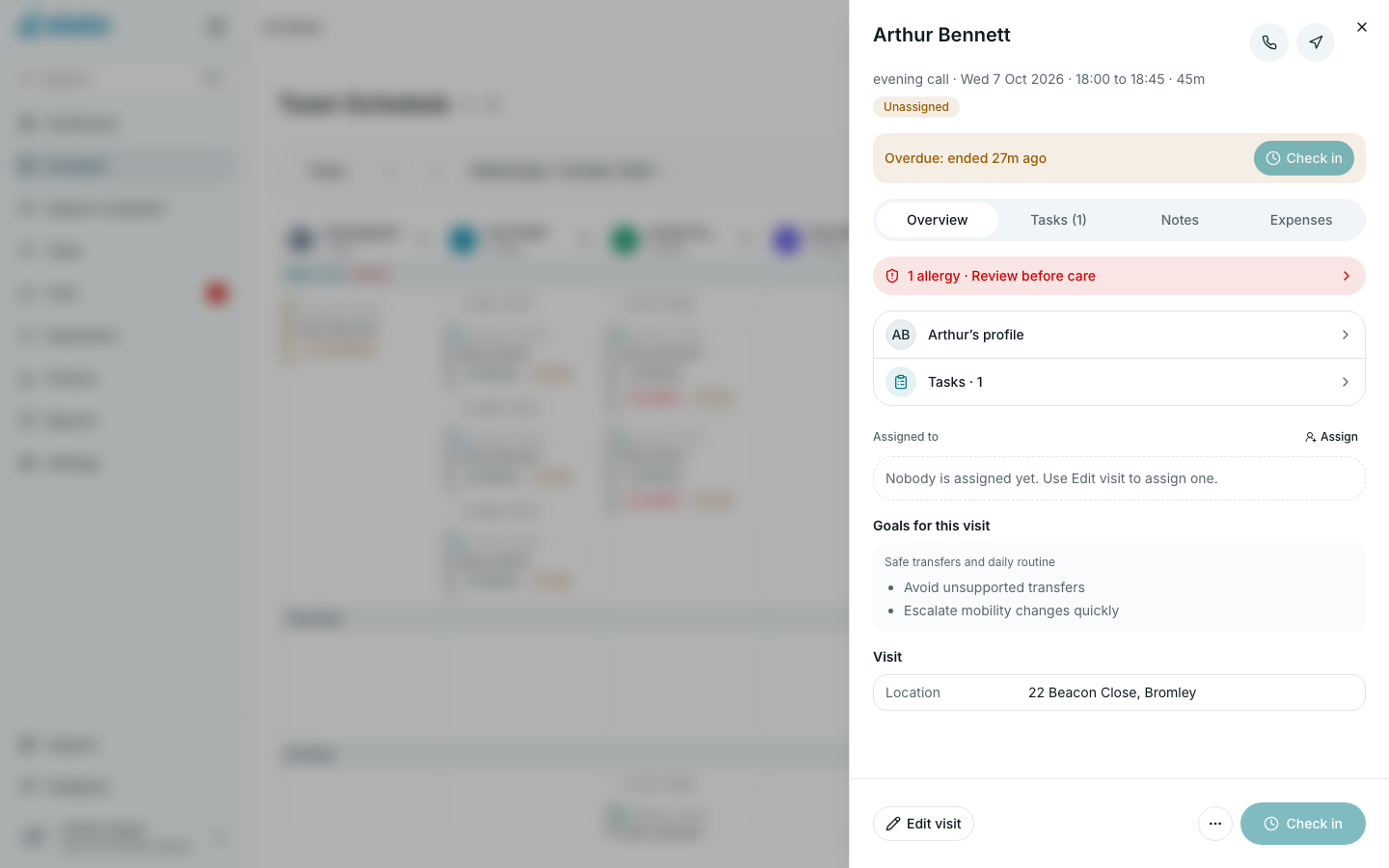
Added rotas with recurring visits, GPS check-in, electronic medication records (eMAR) using the NHS dm+d dictionary, and Stripe billing per role.
Designed Eli, an AI assistant whose actions need the user's confirmation and can be undone, so AI speeds up admin without taking control away from staff.
Backed the build with DPIAs and DCB0129/0160 clinical-safety records; 80 Vercel Functions and 17 scheduled jobs handle notifications, billing and reminders.
Inside the work
Outcomes
Secured over £650,000 of Innovate UK funding (Healthy Ageing Challenge: Designed for Ageing, 2022 to 2024) on the strength of a people-centred design approach.
Presented the research evidence, service adaptations and risk mitigation at the Innovate UK design stage gate review in November 2022.
Every care provider and support recipient in the trials said they would subscribe monthly.
Elate 2.0 shipped about 1,200 commits and 500+ automated tests in four months, with product analytics tracking adoption of scheduling, check-ins and daily logs.
The 54-page Webflow marketing site publishes monthly release notes generated from user-facing commits.
End-to-end service design and delivery: inclusive research, blueprinting, funding-grade evidence, product ownership and hands-on full-stack engineering in a regulated care setting.